







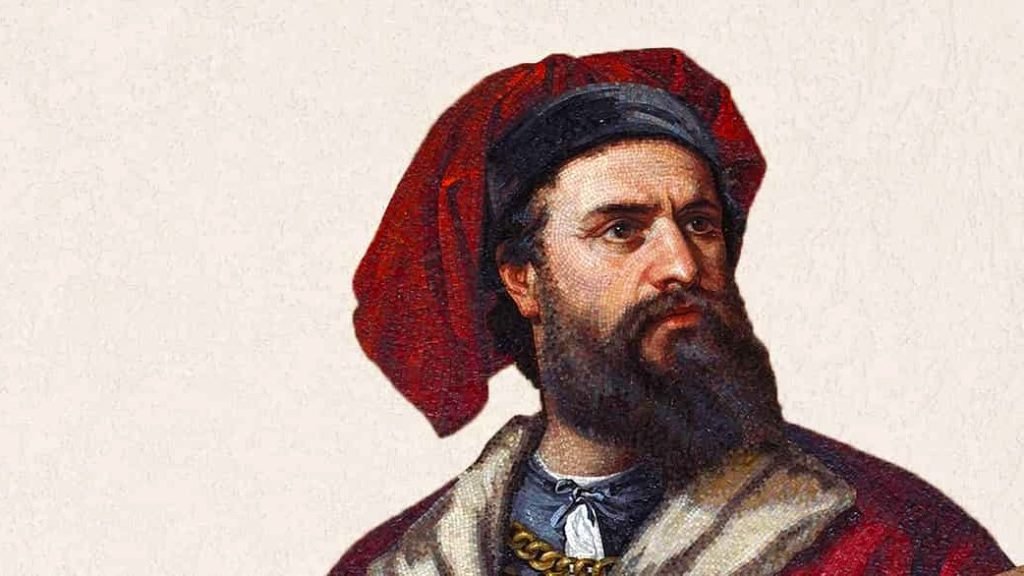
Most people know Marco Polo as the famous Venetian merchant-explorer who traveled to Asia and spent years at the court of Kublai Khan. Far fewer know the name of the woman he married. Her name was Donata Badoer, and she outlived him, managed his estate, raised their daughters in Venice, and left her mark on legal and genealogical records that survive to this day.
This article covers who Donata Badoer was, her family background, what is known about her marriage and children, her role after Marco’s death, and — importantly — an honest look at how limited the historical record actually is.
Who Was Donata Badoer?
Donata Badoer was a Venetian noblewoman, born in Venice around 1280. She is known today primarily through legal records, genealogical documents, and her connection to Marco Polo. No personal writings from her have survived.
Her father is recorded in genealogical sources as Vitale Badoer. Secondary sources describe her as an heiress to a substantial fortune, which would have been a significant factor in any marriage arrangement within Venetian elite circles.
The exact date of her death is uncertain. Genealogy records suggest she died sometime between 12 July 1333 and 4 March 1336, placing her death in her mid-fifties. It is worth being clear that these dates come from compiled genealogical records, not a single definitive primary source.
The Badoer Family and Their Place in Venetian Society
The Badoer were an established, wealthy merchant and noble family in the Republic of Venice. They were involved in both Venetian commerce and politics, which was typical for prominent families in a city built on trade.
Venice operated as a merchant republic. Family alliances carried real economic and political weight. A good marriage could mean stronger trade networks, political protection, and shared wealth across generations.
Coming from the Badoer family meant Donata would have brought a significant dowry and a set of social connections into any marriage. Her status as an heiress made her a meaningful partner in a marriage alliance, not simply a domestic figure. In Venice’s tightly connected elite world, that distinction mattered.
The Marriage of Donata Badoer and Marco Polo
The marriage between Donata and Marco Polo took place around 1300 in Venice. This was shortly after Marco’s return from his years abroad and his release from Genoese captivity, where he had been held as a prisoner of war.
Marco was born in 1254, making him roughly 20 years older than Donata. The age gap was not unusual for the time, especially in arranged marriages among elite families.
The marriage was almost certainly arranged within Venetian noble and merchant circles. There is no surviving personal account of how they met or how either of them felt about the arrangement. Treating this as a romantic love story would go beyond what the historical record supports.
What the marriage did provide is clear in practical terms. Marco brought an established merchant reputation and the fame of his travels. Donata brought noble status, a substantial dowry, and the Badoer family’s connections. The union strengthened Marco’s social position in Venice as he resettled into life as a merchant and head of household. It was a partnership that made sense within the logic of Venetian elite society.
Their Children and a Recent Scholarly Debate
Traditional historical sources record that Marco and Donata had three daughters: Fantina, Bellela, and Moreta. Fantina is notable for appearing in later legal records connected to inheritance disputes, suggesting she was active in protecting her family’s interests.
In 2022, researchers drew attention to a 1319 will written by a woman named Agnese, who refers to Marco Polo as her father. The will also mentions her husband Nicolo and three children — Barbarella, Papon, and Franceschino.
Scholars suggest Agnese was likely Marco’s eldest daughter, possibly born before his marriage to Donata, which would make her maternal line uncertain. This does not change Donata’s confirmed status as Marco’s wife. It does, however, raise an open question about whether Marco had a child from an earlier relationship.
It is important to treat this carefully. The 1319 will shows a woman identifying Marco Polo as her father. Scholars interpret this as strong evidence, but the identity of Agnese’s mother has not been established. This is ongoing historical interpretation, not settled fact.
Donata’s Role After Marco’s Death
Marco Polo died in Venice in 1324. After his death, Donata did not return to her natal family, as widows in some other societies were expected to do. Instead, she remained in the Polo household.
Secondary sources indicate that she took over aspects of the family business and was given authority to execute Marco’s will. For a woman in 14th-century Europe, this kind of legal and financial responsibility was not the norm everywhere, but it was more achievable in Venice, where widows had recognized legal standing to manage property and conduct business.
This tells us something useful about Donata’s position, even if we cannot know the details of her day-to-day role. She was trusted — legally and practically — to manage what Marco left behind. That is not a small thing.
What We Actually Know (And What We Don’t)
It is worth being direct about the limits of the historical record here. Secondary sources note that “not much is known” about Donata beyond her family background, her marriage to Marco, the names of their daughters, and her role as widow and executor.
She appears in legal and genealogical records, not in letters, diaries, or narrative histories. We do not know what she looked like, what she thought of her husband’s travels, how she managed her household day to day, or what kind of person she was. The historical record gives us her legal outline, not her life in full.
Genealogy sites like MyHeritage, FamilySearch, and Geni include profiles for Donata with specific dates and family details. These are useful as compiled summaries, but they draw on fragmented medieval documents. Treat them as careful estimates rather than confirmed facts.
According to tradition, Donata was buried with Marco in the cemetery of the church of San Lorenzo in Venice. However, no tomb survives today. Much of Venice’s church burial record was disrupted over centuries of rebuilding, so this detail comes from later tradition rather than a surviving physical site.
For anyone researching Venetian history, noble families, or the life of Marco Polo, TheBizBay covers a range of historical and business topics that connect the past with broader social and economic context.
Why Donata Badoer Matters
Donata Badoer is not a household name, and the historical record does not give us enough to make her one in the way her husband became famous. But she is not simply a footnote either.
She was a real person from a significant Venetian family who married one of history’s most well-known travelers, raised a family during his extended absences, and managed his affairs after his death. Her story reflects the broader experience of women in medieval Venetian society — capable of real legal and economic agency, but largely invisible in the narrative sources that shape how history gets told.
What survives of Donata Badoer is partial and filtered through records that were never meant to tell her story. That is exactly why it is worth paying attention to what those records do say, clearly and without exaggeration.
Read Also:


